



no job but all this work 😭
Examining what the "polyworking" trend really means and positing a new way of thinking about utopias.

Know someone who needs to spend less time online? Send them this newsletter — and help them do something more productive than scroll!!

Putin lowers the threshold for using nukes
Russia fires intercontinental ballistic missile
This is…concerning. Who else read Nuclear War? Because we know how that plays out 😬
Mike Johnson institutes bathroom ban
Marks of deeply mean, mean times. Rude! And stupid. Despite many takes, the biggest takeaway is that these (identity politics) are distractions not about Sarah McBride but the institutional trickle down that will affect normal people and propel assault. The point is to exhaust you — then steal everything as you cry. (I do think this approach is on borrowed time as the GOP readies to devour itself.)
Neo-Nazi Marchers Shock Ohio’s Capital
Nazi flags at 'The Diary of Anne Frank' production
Related. It brings me no joy to share these. (See also: the increasingly emboldened Christian right.)
‘Morning Joe’ Hosts Meet With Trump
The NFL renews its dance with Trump
Trump Argument on Removing DA Canceled
I think the “obey in advance” thing is corny but this is what it actually looks like.
Let Athletes Do the ‘Trump Dance’ in Peace
Barron saying ‘I Like My Suitcase’
ET revisits rare moments with young Barron
Sure, do what you want, but this is soft empowerment, or the Elizasue sis of the Streisand Effect.
House Bill to Declare Nonprofits As Terrorists
”the non-profit killer”
Concerned about this!
Why They Voted for Trump
One of the more illuminating reads, regarding young men and Trump support. It’s really not what you think! That is to say: we created a beautiful weapon of identity, which we gifted to the world to repeatedly stab us with. Related are the very confusing final exit polls.
How Kamala Harris Burned Through $1.5B
Does the spending of a billion dollars really matter when the other side had the richest man in the world at bat? As someone said on Twitter, that’s like having 44 George Soros.
Pollster Ann Selzer ending election polling
All of them should do this.
Super typhoon makes landfall in Philippines
Six. In less than a month. (Also in the same place: their VP threatened to kill the president — and both are children of local political dynasties.)
Climate deal too little too late, poorer nations say
Climate-vulnerable nations walk out
COP needs to end. What a useless, self-serving mess.
Bird flu case has experts worried
Great! Something for Trump and RFK Jr. to handle 🤗
Pentagon reveals hundreds of UFO sightings
Unfortunately — again — no one cares.
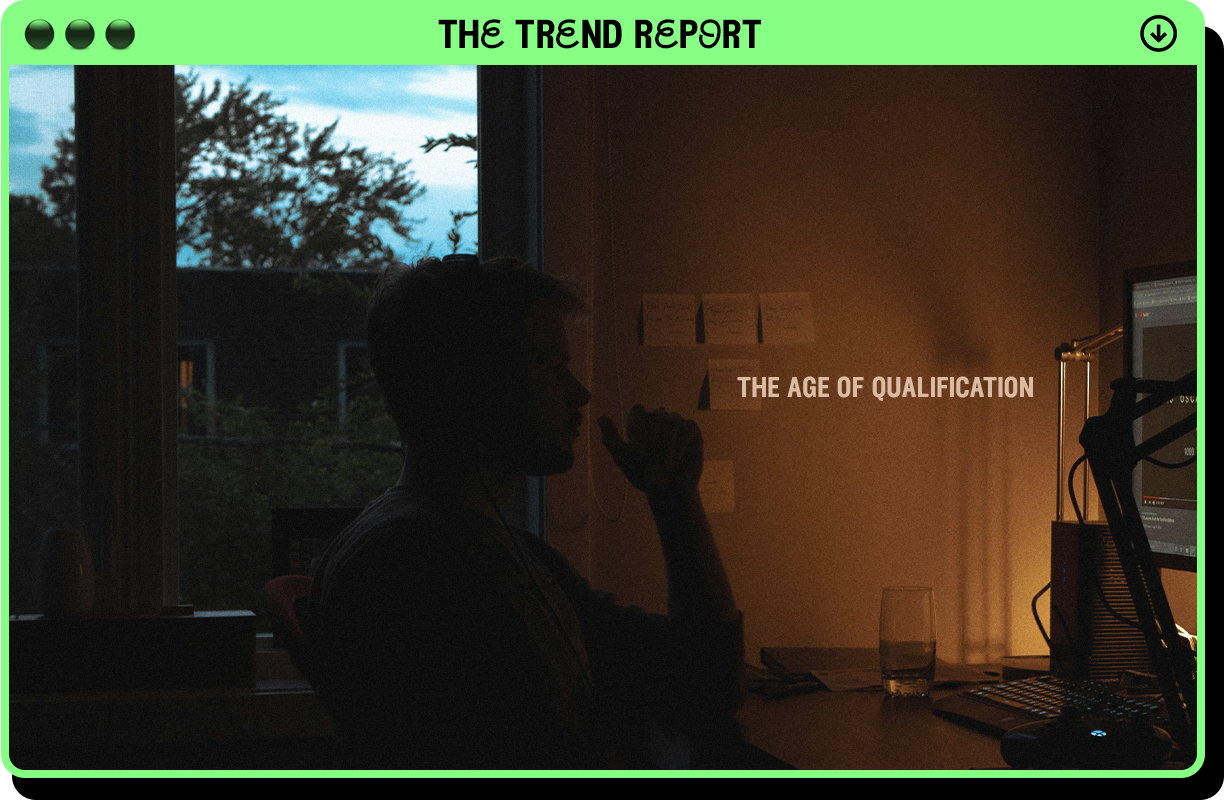
People keep talking about “polyworking” and it’s making me wild. Not because I don’t believe the premise — that more people are working multiple, concurrent jobs, largely in freelance capacities — but to me this is a very clear sign of the end times for workers. In the 2000s, when I first started working, you could just have one job and survive. In the 2010s, you could have one job and a fun, goal-related little something on the side that you hoped became the thing. Now? You have a job and a side-hustle but also another job and none of those ladder into your goals so you still have to keep doing them all despite none of them really being fulfilling. Did I mention you’re doing this while freelance, without set health care or other corporate amenities like holidays?
That’s what’s being sold in the “polyworking” media blitz, in the stories of Gen Z wanting to “go freelance”: this is bait — and I urge you not take it. The thing about working freelance — as a freelancer now, who doesn’t love it and who has been in and out of freelance work over the past fifteen or so years — is it often can hold you close to precarity as you’re on the bottom of everyone’s to-do list unless you’re “permalance,” folded into a steady workflow. As a freelancer, you’re outside of the system, begging for work and for your pay, without any of the benefits that a company affords workers. The “Freelancers rule the world!” story of the 2020s isn’t some sunny business fairytale resulting in a more independent workforce but instead is bitter retribution for the “No one wants to work” and Great Resignation phenomenon of the early 2020s: this is the business world weaponizing stability, to attack you with economic instability while threatening to hire robots instead of people like you. Yes, people leave jobs because they aren’t paid enough and feel like their job doesn’t care about them — but where does that leave us? In a deepening pool of underemployed “polyworkers,” as more and more businesses lay people off, as fewer places are hiring and as jobs are now flooded with thousands upon thousands of applications. Meanwhile, business pat your ass out the door as they opt to not backfill your role, saving them money while fucking over former coworkers. They win, workers lose. Now you spin plates and hope a meal will fall on one of them. Need more proof of this? See also: white collar recession, the ties between greedflation and the rich gloating about Trump, unemployment bloat due to "Department of Government Efficiency" culture, pretending "NEETs" are a good trend and not the result of a failing economy.
Given corporate defensiveness and polyworker growth, a fascinating culture is emerging which adds a shitty gloss to what was once hustle culture: the rise of the Creator As Expert™, people who are experts in a field who gain popularity because of their qualified opinions. What was once only creators like Mark Rober and Dr. Mike has turned into a crowded landscape of figures like Dr. Youn and Alex Peters and Jamelle Bouie and Katryn Anne Edwards and Javon Ford and Dr. Katelyn Jetelina. From the “I have a master’s degree!” antics of Bee Better to the RFK-pilled “Your food is poison!” ranting of Vani Hari to the “I’m a child attorney and my dad is Lev Parnas!” rise of Aaron Parnas, we’re in the age of qualification, that such an open playing field of underemployed, over-talented people in a declining media landscape means over-qualified people are filling their free time with efforts to assert authority, both making noise online while working to differentiate themselves. This isn’t a “new” thing but it is a hot topic of the week as talk of “news influencers” are having a moment given 40% of young Americans are getting news from creators in this genre.
This brings us back to you, the unemployed, the wannabe freelancer, the dissatisfied worker — people like me: the catch of “polyworking,” in your having to work multiple jobs while flexing your credibility online, means that everyone online is now a resumé. For years, the career advice I gave young workers was that your Instagram, TikTok, etc. is just as important as your work history in that it shows who you are as a real person, going behind corporate chatter to show who someone would be working with. This also means: for every you there is a me, someone submitting a resumé and a project like The Trend Report™ as proof of their work. But the deeper catch? There’s a bigger fish than me also submitting, also cold calling, who is also swimming in the job pool, navigating the non-hiring businesses, the group firings, the general crumbling of the economy as capitalism wheezes on with a smile. We work multiple jobs to survive — but no one is going to save us, despite our singing and dancing online. The media and you and me can give it whatever cute name we want but it’s all sugar atop the poison of (global) economic precarity.
Anyone in this position knows this isn’t anything new just that the noise, like everything else, is getting louder. Whether reassuring or not, I’ll leave you with the fact that this is a decades-old phenomena getting another reskin. You can get a taste of this from a 1996 essay by Simon Reynolds in The Wire, who came upon this conclusion while considering jungle music in the context of rave and mass culture.
In hiphop, ‘real’ has two meanings. First, it means authentic, uncompromised music that refuses to sell out to the music industry and soften its message for crossover. ‘Real’ also signifies that the music reflects a ‘reality’ constituted by late capitalist economic instability, institutionalised racism, and increased surveillance and harassment of youth by the police. ‘Real’ means the death of the social: it means corporations who respond to increased profits not by raising pay or improving benefits but by what the Americans call downsizing (the laying-off the permanent workforce in order to create a floating employment pool of part-time and freelance workers without benefits or job security).
Jaguar debuts its new branding
“you hate our rebrand”
“copy nothing”
"vibrator vape"
"revisit the 1935 logo"
One of the biggest conversations of the week was just how dog shit awful the jagUar rebrand was. Branding aside — which, again, is dog shit awful and is baking a review — people are using it as an excuse to go all in on being anti-woke, anti-diversity. Get ready for this to be “the new normal.”
Snow White star apologises
Rebecca Hall: ‘Don’t Regret Working With’ Woody
"Zaslav talking up Trump’s win"
“celebrities in the mines of our society”
See above: we’ve quickly entered the era of Hollywood marching center right, to become more appealing as a death rattle cash grab. Get ready for more Heaven Is Real and Sound of Freedom propaganda slop along with hyper-safe shit like the How To Train Your Pet Dragon live adaptation, which reskins the original movie without changing the dragons.
“It’s tired.”
"Depression era coded"
I’m not going to write an essay on “character dressing” and lookalike contests but, as these posts prove, these phenoms reflect too much-ness culture, the lack of real culture (or fandoms and social metrics cannibalizing, say, action), and the forced labor of everyone to be marketers. By the way: we have another year of Wicked marketing as the sequel comes out next year. I can take another year of Ariana and Cynthia.
Ronan Farrow Warns: High Risk of Being Hacked
As if we aren’t already steeped in paranoia culture!
Pokémon Go Players Unwittingly Trained AI
A surveillance state twist that I shouldn’t be surprised by but I am.
‘James’ Wins National Book Award
Anyway, some good news.
Kraft Mac & Cheese Sales Fall
No shit. This is what the rain shadow effect of La Croix’s rise looks like.
“away from thinness”
Maybe I spoke about this, maybe I haven’t, but I’ve been thinking about for some time that we’re entering a moment where being not-thin will truly become countercultural and a mark of being more human, above “the trends.” Siri, play Emma Specter’s More, Please.
DJ-Kicks: Steven Julien
Marie Davidson - Sexy Clown
C.R.U.S.H. | Bambounou & Priori
The music that got me through the past few days, as Steven’s DJ-Kicks mix is a (Shocking!) best-of-series/best-of-year entry while Marie remains the undisputed poetess of techno while Bambounou and Priori offered effervescent love techno. Also of note: the rerelease of Studio’s (!!!!!) 2006 West Coast.
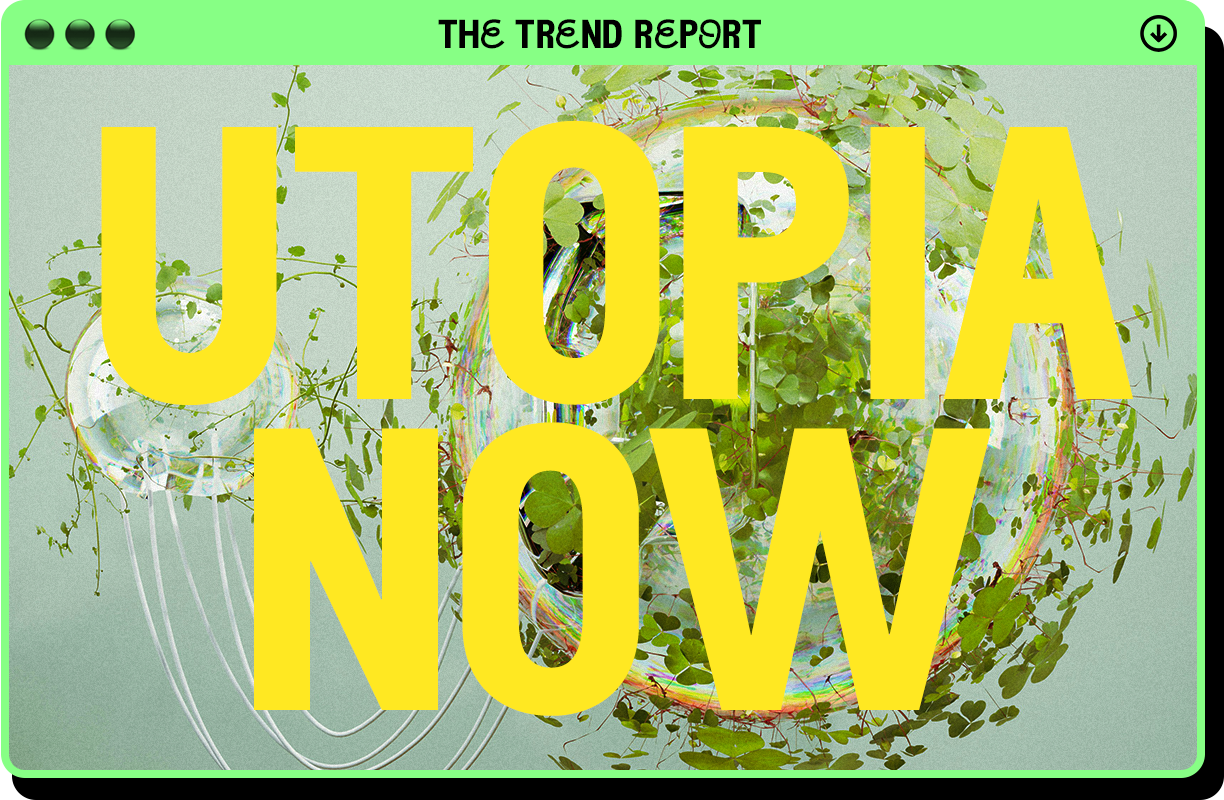
Why aren’t we writing utopias? This was a riddle I found myself tangled in a few years ago, while in a queer speculative fiction cohort of Lambda Literary fellows. We had shared work interrogating the world’s problems through science fiction landscapes, moody period pieces, five-minutes-in-the-future reflections of now — and none of them centered happiness, leading with the “good,” to create places for people like us to be safe, loved, and accepted. Why weren’t we designing utopias? Why were our imaginations failing? What barriers existed between us and better worlds? Or were we just reflecting the impossibilities of our reality?
The answer was obvious, as I recall our faculty member (the icon) Larissa Lai explaining: is the reason why we abandon utopias because these are spaces without drama? Is there enough tension in perfection to maintain interest, to keep a story moving forward? This is a fair point and, try as we might, no story about utopia ever is “about utopia” but instead about the inability of a utopia to exist: they are the flaws in communal homogeny (The Giver), covers for corporate power (WALL-E), schemes to uphold the rich (Land of Milk and Honey), a surveillance entertainment ruse (The Truman Show), a stratified racial fantasy (Pleasantville), abuses of power and dogmas (The Sacrament), or literal hell (The Good Place). Utopia stories are never happy and, despite many giddy works about happiness and the pursuit of (Big Girl, Happy Go Lucky, Big Swiss, Less), utopias are almost by nature unhappy spaces of discontentment. Which is to say: one person’s utopia is another person’s dystopia, one’s heaven is another’s hell. (An exception: I Who Have Never Known Men, a singular non-utopia utopia book about world making on your own terms, which — as the book shows — isn’t without pain, without issue, but the book’s envisions a world where perfection is being able to simply survive.)
While slightly antithetical, it can help to reflect on the works of Octavia E. Butler whose works are distinctly non-uptoic — but that’s exactly what positions them as utopic. As political scientist Claire P. Curtis wrote for Utopian Studies in 2008, offering a survey of the speculative writer’s work, Butler is a master of “realist utopias,” in stories of people who are not superheroes but instead the traditionally oppressed (female, minority, poor), people “who see the worlds in which they live and aim to make those worlds visible to others,” to help square the reality of all worldwide. “The state of nature is not something from which we can escape and that the establishment of civil society is no guarantee of security,” Curtis writes, going on to explain that having a utopia now (or in our fictions, fantasies) requires agreement, goal sharing, and bridge building. “Only in this negotiation can we find security, live together, and gingerly work towards a better future.”
I’ve been juggling these ideas for years now, in my own personal fiction (How do dreams become nightmares?) and in trying to navigate this world we’re in via weekly dispatches that not only recap “what you missed” but help to better see how to pass through the world together. I’d been meaning to muse on this subject for months and years but, as mentioned, why dwell on utopias if their perfection sums up their fragility? Or rather: one person’s sublimity is another person’s oppression. Crafting a utopia is to settle into dream states instead of working to make real world change.
But utopian realism: there is a need for that, particularly now, as we discussed in the comments last week thanks to reader Zoe’s prodding. Like Butler, this can come not only from working together but from seeing each other as equals, willing to understand what makes you you and how to mutually offer protection. This is a cultural word problem we must solve and, at the moment, we’re not getting passing marks as we’re far from equilibrium. But the answer — as is said week after week — is not just “in each other” but created through life together in a way that requires our being non-consumers and non-individuals. A pendulum is swinging, where well meaning, far left approaches and language have become culture’s greatest jokes based in nannying others, which has propelled a rise in (far) right behaviors like casual homophobia, increased use of the r-word, demonizing what you don’t understand, and more traditional “hate”: this is learned backwardness based in the individual body seen as an end instead the beginning. Regardless of how we arrived at this point (Loss of religion? Education?) doesn’t matter but the end result is a deeply self-centered Western (American) culture where you count cheese slices because you can’t cook for others, where you complain about social services for others even if you benefit from them too. There’s a deep lack of empathy or goodwill for our fellow citizens and humans, resulting in Gen Z believing half a million dollars is what financial stability means, a parroting of aesthetic beliefs that prioritizes personal gain instead of collective advancement, the championing the whole instead of the individual.
This is to say: the greatest barrier to a realist utopia isn’t our selfishness but the myth of individualism, that a society thrives from your being a machine, a business, a consumer who can ascend to affluence. Simping to be rich is a trojan horse for forcing you to pay to do anything, that “freedom of choice” is your to-be billionaire entry point. We talk about this every other month but it has to be said again: “buying” new things is the opposite of a solution, the opposite of individualism since you cannot buy happiness, nor can you buy your way to heaven. This takes us to another realism and the must-read homework of our lifetime: the late Mark Fisher’s seminal Capitalism Realism from 2009, which originated the thought that it’s “easier to imagine the end of the world than the end of capitalism.” “Capitalism is what is left when beliefs have collapsed…and all that is left is the consumer-spectator,” Fisher writes. This idea of consumer-as-spectator confuses action with simply sitting, where checking boxes is doing something: a life measured in Change.org petitions is not a life. This also supposes that we, a debit card holding audience, will fix our shit through “self-regulation” — but this also presupposes that we as the audience are all learned, all pursuing greater intelligence. As we’re experiencing, this is a mythic prospect that opens the door for authoritarianism, a savior to save us because we’re too saddled with work and self-interests to take action. Fisher’s solution is “collective management,” by post-consumer action that forms coalitions instead of individualist pods. Hell is other people, sure, but so is heaven. Our culture’s selling us bright and shiny solipsism is the noose with which we’re hanging ourselves as a society.
Perhaps this is why finding a utopia is so impossible because it involves thinking beyond our own bodies, our own screens, neighborhoods, cities: you have to do something to get over the rainbow. “Group projects suck,” we complain. “Can’t someone else do it?” we whine. “Birth is a curse and existence is a prison,” we repeat. That’s the honey trap of a dystopic reality — and we must work to free ourselves from it. “We do not move forward by denying that we live in the state of nature,” Curtis writes. “The only way really to be able to move forward is through honest and open communication about the conditions under which we live.”

“I’ll never understand”
”dad doesn’t talk”
"The incoming Education Secretary"
“one pill makes you”
“the FBI was able to use your shoes”
“this poor lady”
“white women when”
Politics!!!!!!
@world.wide_wisdom
I love this account on TikTok that uses shitposting to give you really, really wild geography facts.
“Welcome to Babagoobey”
This is funny, but I don’t understand how or why Alex Consani has gotten to get away with her bizarre, zip-a-dee-doo-dah blaccent after all this time. It drives me insane.
“funniest video”
The anti-Halloween Christians are going to freak from Wicked. (Satire btw.)
“Millennial mean girl energy”
This is making me sick to my stomach.
“lol mama”
Tina Knowles is everyone’s mother.
“eating poop”
Can we…make some foods look pretty? Please, UK?
“That’s what it’s called?”
Open the schools — but also the editing on this video? Perfect.
"Person of The Year"
She really got me through this year. (Also: Elon is 100% going to win this award. Sigh.)
“on muscle gays”
This made me feel better about my body image (not a joke).
“If I was her”
"The pillow behind the headboard"
Two of the best queer posts of the year, the second one like a White Lotus storyline.
And, finally, a look at how Bobby and I spend our free time in Barcelona.
Subscribe to The Fox Is Black and gift a paid subscription today.
brilliant work yet again
Thanks for the little shout-out, Kyle and amazing writing this week, as usual! Loved your insights on the utopia; there were always inconsistencies I felt about the concept but not could express until I read your piece. There IS a need for utopian realism, and I'm glad you pointed that out, especially because it gives the idea of crafting utopia that makes it just a bit more, well, realistic (lol), and I mean less-fantastical, so hopefully more achievable in our minds (which, like I said last week, is too imagination-poor rn).
Personally I think Ursula K. Le Guin's The Dispossessed should be considered a work of utopian realism, and I'm glad I now have a clearer way of describing it to friends when they ask for a book reco! 😃 😃 😃